
Rebar
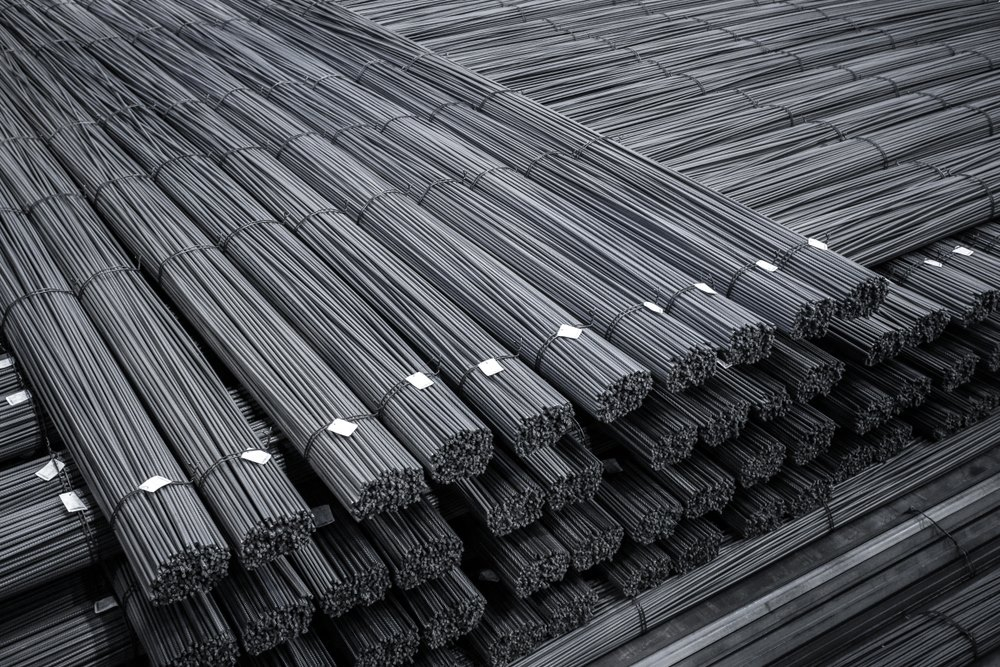
Rebars are long bars made of steel and come in various sizes. Rebar production can be both plain and ribbed, with construction rebars generally being ribbed. The reason for ribbing is to prevent the rebar from moving within the concrete during sudden pressures caused by floods, earthquakes, or other such events.
Rebars are produced using the hot rolling process, with steel ingots or scrap iron sometimes used as raw materials. Different companies produce rebars in various sizes, and each may adhere to specific standards during production. This variation can lead to differences in the quality of rebars among different brands, which should be taken into consideration.
Rebars are manufactured in two types: plain and ribbed, and they are classified according to the following table:
| Type of Rebar | Characteristic Sign of Rebar | Rebar Code |
| Plain | س 240 | A1 S240 |
| Spiral Treads | آج 340 | A2 S340 |
| آج 350 | A2 S350 | |
| Twill Treads | آج 400 | A3 S400 |
| آج 420 | A3 S420 | |
| Compound Treads | آج 500 | A4 S500 |
| آج 520 | A4 S520 |
Plain Rebar
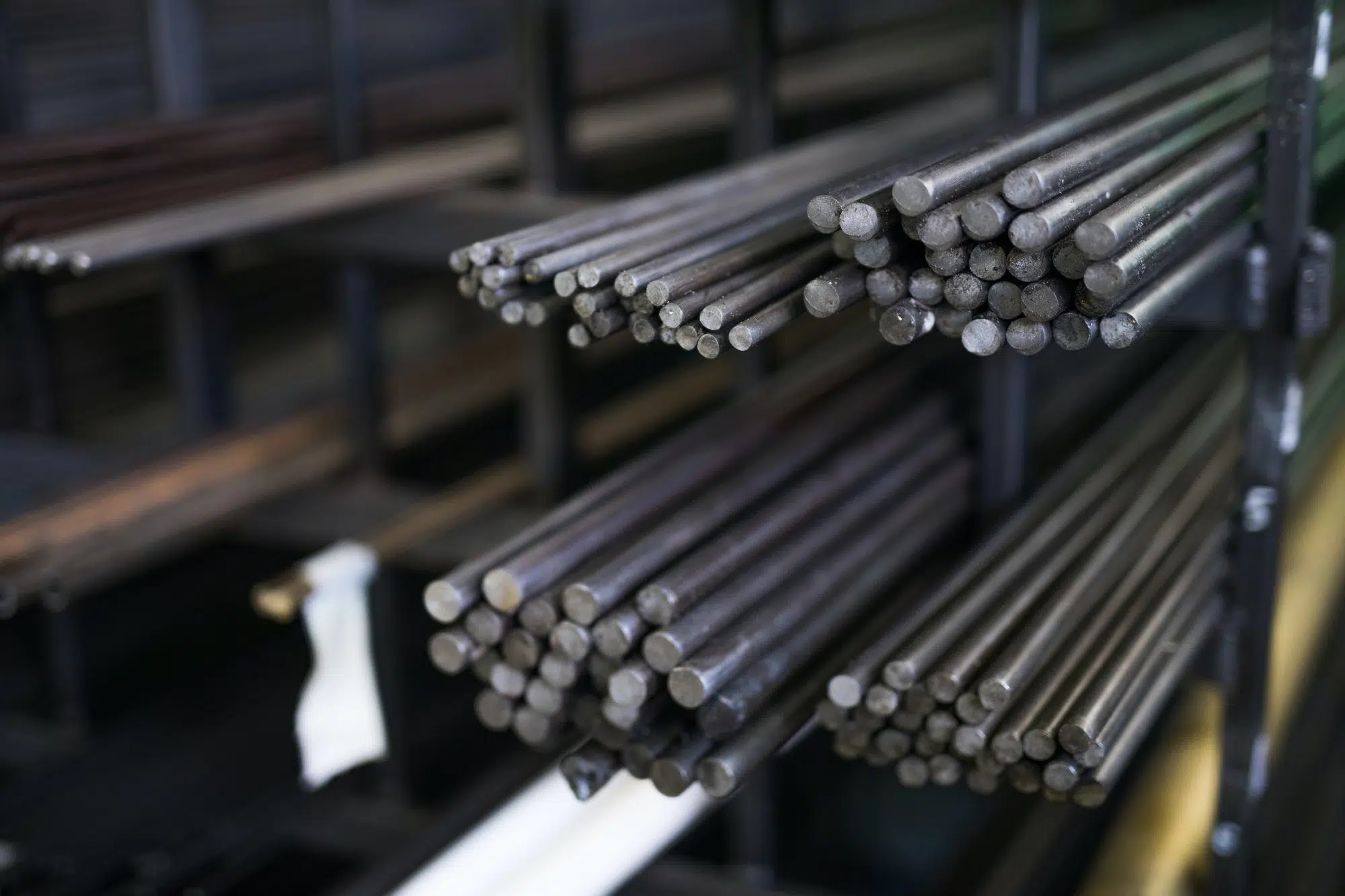
Plain rebar, also known as A1 and code S240, is a type of rebar that has a smooth and polished appearance. In other words, plain rebars do not have any treads on their outer surface. They are used to increase the tensile strength of concrete but are limited in their use in construction.
Plain rebars are produced and available in different diameters ranging from 6 to 200 mm, and they come in lengths of 6 or 12 meters, each offering its own performance characteristics. It’s important to note that simple rebars have lower tensile strength compared to other types of rebars, classifying them as soft steels.
These rebars find applications in various industrial cases, including the production of industrial and automotive parts, agricultural tools, hinges, iron fittings, hot forging, trans bars, bolts, and nuts. They are also preferred for forging and welding due to their ease of cutting and bending compared to other rebar types. As mentioned, simple rebars are mostly used in the industry, but they also serve the construction industry for making bolts and work rabbits.
Ribbed Rebar
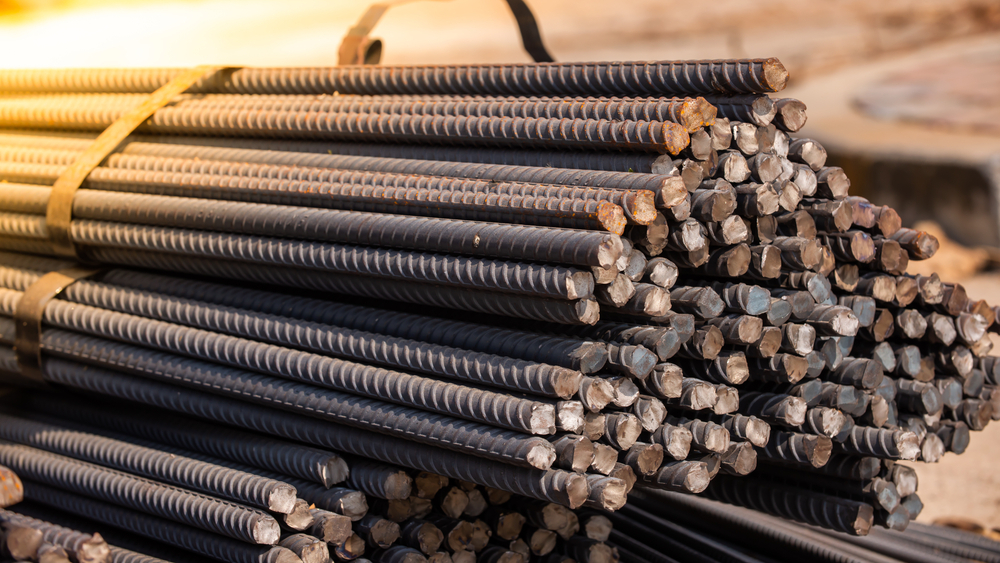
Ribbed rebars have cuts on their outer surface, known as ribs. One of the most significant differences between plain and ribbed rebar, which holds paramount importance in building construction, is their adhesion strength to concrete. The treads on ribbed rebars allow concrete to adhere more effectively to the rebar, making it challenging to pull the rebar out of the concrete. The primary purpose of these rebars is to enhance the strength and resistance of concrete. Ribbed rebars are produced in two types: bars and coils, with sizes ranging from 5.5 to 40 mm.
Ribbed rebars are identified as A2, A3, and A4 (while the name A1 is used for plain rebar). The difference among these rebars lies in their tread patterns: A2 rebar (code S340 and S350) has spiral treads, A3 rebar (code S400 and S420) has twill treads, and A4 rebar (code S500 and S520) has compound treads.
The use of ribbed rebars is common in construction, and they find various applications in this field, including:
- Concreting the walls
- Increasing the strength of concrete
- Strengthening the foundation
- Enhancing shear force
- Concreting the floor of the structure
Physical Characteristics
The ability of an object to return to its original shape (elastic property) after loading and unloading is called the elastic modulus. This characteristic is considered one of the most important mechanical properties of rebars. The modulus of elasticity of concrete typically ranges between 14 and 41 pascal, which makes concrete a brittle material prone to cracking.
To enhance the elastic performance of concrete, steel bars are used. The modulus of elasticity of steel bars is approximately 200 GPa, though this value may vary for different diameters and dimensions of rebars. If the modulus of elasticity is less than 200 MPa, it is necessary to increase the number of rebars used to improve the elasticity of the structure and reduce the possibility of cracking. The modulus of elasticity for the steel used in rebars can be determined from the stress-strain curve of their material. The table below displays the types of rebar based on ductility.
| Classification Based on Ductility | Characteristic Sign of Rebar | Feature |
| Soft Steel | س 240 | The yield point is obvious in the stress-strain curve. |
| Semi-Hard Steel | آج 340 | The yield range in the stress-strain curve is very small. |
| آج 350 | ||
| آج 400 | ||
| آج 420 | ||
| Hard Steel | آج 500 | The yield point in the stress-strain curve is not known. |
| آج 520 |
“Elongation” refers to the ability of a material to change its longitudinal shape under axial (tensile) loads. When additional loads are applied to the structure, the rebars significantly change their shape, and in this way, they control the expansion of cracks in the concrete. The increase in the length of the rebar is measured by applying a tensile force to it, a test known as the tensile test. This feature has a direct relationship with the tensile strength of the rebar.
Steel retains its elastic property until it reaches its yield strength. As a result, if the load is below the yield point, the reinforced concrete structure returns to its original shape after loading. The yield strength of steel bars typically falls between 275 and 690 MPa, and this resistance is independent of the diameter of the rebar.
By using a suitable arrangement and combination of rebars, the required resistance can be achieved without changing the area (number) of rebars. This characteristic increases the flexibility of using rebars in different concrete structures to attain similar properties. According to Iranian standard 3132, elongation, tensile strength, and minimum yield strength for plain and ribbed rebars should conform to the table below:
| Type of Rebar | Characteristic Sign of Rebar | Elongation A5 | Elongation A10 | Tensile Strength (MPa) | Yield (MPa) (Min) | Yield (MPa) (Max) |
| Plain | س 240 | 25 | 18 | 360 | 240 | – |
| Spiral Treads | آج 340 | 18 | 15 | 500 | 340 | – |
| آج 350 | 17 | – | 500 | 350 | 455 | |
| Twill Treads | آج 400 | 16 | 12 | 600 | 400 | – |
| آج 420 | 16 | – | 600 | 420 | 545 | |
| Compound Treads | آج 500 | 10 | 8 | 65 | 500 | – |
| آج 520 | 13 | – | 690 | 520 | 675 |
Chemical Characteristics
Rebars can exhibit different chemical compositions depending on their intended applications. The chemical composition varies slightly between the molten state during casting and the final product. The table below presents the maximum amounts of elements allowed in the chemical composition of the molten metal for casting simple and ribbed rebars, presented in mass percentages and in accordance with Iran’s 3132 standards.
| Type of Rebar | Characteristic Sign of Rebar | Silicon Carbide | Manganese | Phosphorus | Sulfur | Nitrogen | Maximum Carbon Equivalent |
| Plain | س 240 | 0.22 | 0.55 | 0.75 | 0.050 | – | – |
| Spiral Treads | آج 340 | 0.32 | 0.60 | 1.30 | 0.045 | – | 0.50 |
| آج 350 | 0.27 | 0.60 | 1.60 | 0.040 | 0.012 | 0.51 | |
| Twill Treads | آج 400 | 0.37 | 0.60 | 1.60 | 0.045 | – | – |
| آج 420 | 0.30 | 0.55 | 1.50 | 0.040 | 0.012 | 0.56 | |
| Compound Treads | آج 500 | 0.40 | 0.60 | 1.80 | 0.045 | – | – |
| آج 520 | 0.32 | 0.55 | 1.80 | 0.040 | 0.012 | 0.61 |
Asan Form Kimia Company is a prominent and well-known supplier of various types of plain and ribbed rebars in different shapes and sizes in Iran.